When Silence Becomes Policy: The Vaccine Study You Weren’t Allowed to See
“The corruption of science isn’t just in the data we’re shown. It’s in the data we’re never allowed to see.”
The Hearing That Should Have Changed Everything
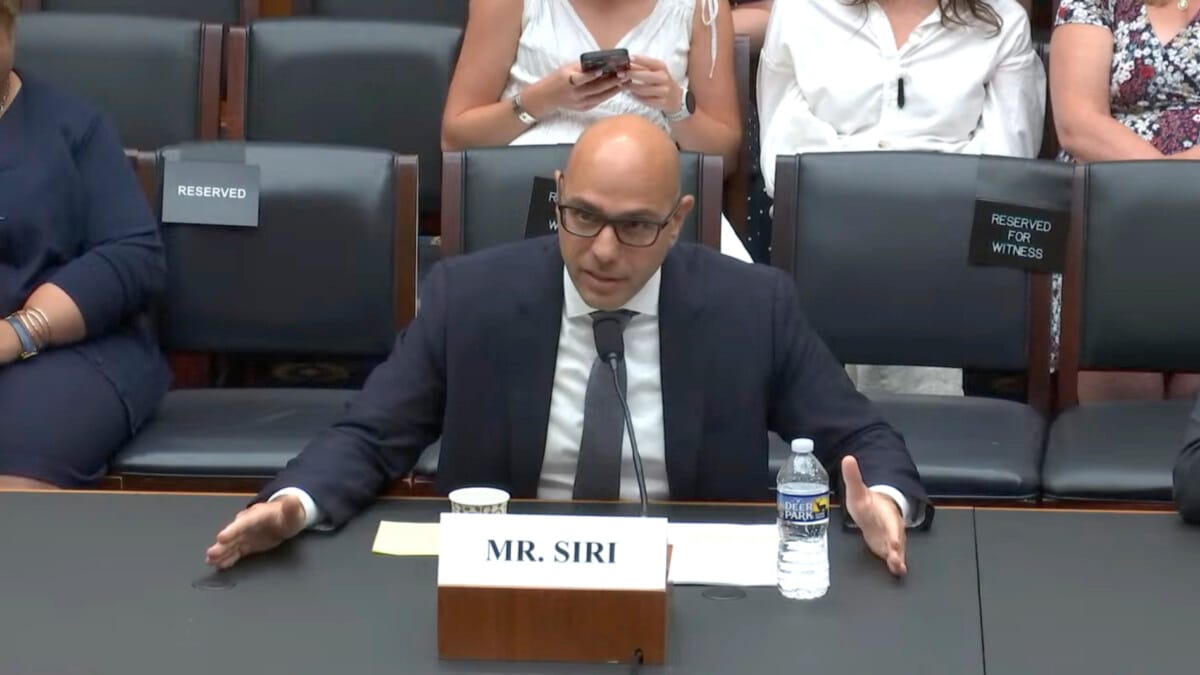
On September 9, 2025, in a Senate chamber that looked more like theater than truth-telling, a hearing was held with the bluntest of titles:
“How the Corruption of Science Has Impacted Public Perception and Policies Regarding Vaccines.”
The chair was Senator Ron Johnson, one of the few lawmakers willing to question the pharmaceutical juggernaut. His guest: Aaron Siri, managing partner of Siri & Glimstad LLP.
This wasn’t Siri’s first time at the microphone. Through his firm’s relentless use of the Freedom of Information Act, he had forced federal agencies to cough up what they never wanted to admit — like the CDC’s own data showing alarming rates of adverse events after COVID-19 vaccination, and the FDA’s internal communications revealing how safety signals were downplayed.
But on this day, Siri unveiled something even bigger. Not leaked emails. Not redacted reports. A buried study — mainstream, large-scale, rigorously executed — that should have altered the vaccine debate forever.
And instead, it was ghosted.
Who Is Aaron Siri?
Siri isn’t a doctor, a virologist, or a politician. He’s a lawyer. And in many ways, that’s exactly why his work has landed like dynamite.
- His firm, Siri & Glimstad LLP, employs more than 100 professionals.
- They lead one of the largest vaccine-focused legal practices in America not representing pharmaceutical companies.
- They’ve filed hundreds of lawsuits: vaccine injury cases, religious and medical exemption cases, policy challenges, and transparency demands.
And here’s what makes him uniquely dangerous to the establishment: in court, you can’t rely on credentials. You can’t wave your title or your “consensus” as evidence. You have to produce hard proof — government documents, data, admissions under oath.
That’s why Siri has built a career exposing contradictions that credentialed experts would rather ignore. When Siri says a study exists, it’s not rumor. It’s fact, backed by documents.
The Study That Was Supposed to End the Debate
The Henry Ford Health study wasn’t designed by “anti-vaxxers.” Quite the opposite.
The lead investigators were as mainstream as it gets:
- Dr. Marcus Zervos, head of infectious disease at Henry Ford Health, co-director at Wayne State University, and a principal investigator for pharmaceutical vaccine trials.
- Dr. Lois Lamerato, senior scientist, epidemiologist with 250+ published works.
- Dr. Amy Tang, biostatistician and professor, with over 100 published studies in clinical trials and real-world evidence research.
Their stated intent? To rule out vaccines as a cause of chronic illness and, in their own words, to:
- “Reassure parents of the overall safety of vaccination.”
- “Allay parental concerns and bolster vaccine confidence.”
This was never supposed to be a threat to the system. It was supposed to be its strongest defense. But the data refused to cooperate.
A Dataset Built for Truth
Henry Ford Health is no small operation. It’s one of the largest integrated health systems in the U.S., with:
- 4.2 million ambulatory visits annually
- 570,000 enrolled members in its HAP insurance plan
- Fully integrated medical, clinical, payer, and immunization registry data
In other words, they had something researchers dream about: a captured population with comprehensive, longitudinal health records.
From this, they identified 18,468 consecutive children born between 2000 and 2016.
- 1,957 completely unvaccinated.
- 16,511 vaccinated, with a median of 18 doses each.
- Followed from birth until disenrollment or December 2017.
- Children with congenital conditions were excluded, leaving a generally healthy cohort.
This wasn’t anecdote. It wasn’t recall surveys. It was hard medical record data, spanning 17 years, with nearly 20,000 children.
What the Numbers Revealed
The study expected to show little to no difference between groups. Instead, it found this:
- Vaccinated children were 2.5x more likely to develop chronic illness overall.
- 3.03x higher rate of allergic conditions (atopic disease).
- 4.29x higher rate of asthma.
- 5.53x higher rate of neurodevelopmental disorders.
- 3.28x higher developmental delay
- 4.47x higher speech disorders
- 5.96x higher rate of autoimmune disease.
And then there were conditions where all the cases existed in the vaccinated group — and zero in the unvaccinated.
- ADHD: 262 cases in vaccinated kids. 0 in unvaccinated.
- Learning disabilities: many in vaccinated. None in unvaccinated.
- Tics: same pattern.
The math itself couldn’t compute a rate when one group was zero. These weren’t marginal differences. They were chasms.
The Stress Test: Regression Analysis
Weak studies collapse under adjustment. Strong studies survive it. The Henry Ford team adjusted for:
- Gender
- Race
- Prematurity
- Birth weight
- Respiratory distress
- Birth trauma
They ran Cox proportional hazards regression — a method that measures long-term risk over time. Even after these adjustments, the results didn’t budge. Hazard ratios still showed vaccinated children were significantly more likely to develop chronic illness. Many results were statistically significant (P ≤ .05).
The conclusion was unavoidable:
“Vaccine exposure in children was associated with an increased risk of developing a chronic health disorder … particularly asthma, atopy, eczema, autoimmune disease, and neurodevelopmental disorders.”
Why the Study Was Buried
By 2020, the study was finished. Siri obtained a copy. The authors admitted it was well designed, well executed, and worthy of publication.
And then they refused to publish it.
- Dr. Lamerato confessed she didn’t want to “make doctors uncomfortable.”
- Dr. Zervos admitted he feared losing his job.
Fear, not flaws, killed this paper. Had it shown vaccinated children were healthier, it would have been front-page news. Because it showed the opposite, it was buried alive.
The Perfect National Distraction
Now, ask yourself: why wasn’t this hearing headline news? Why didn’t the Henry Ford Study dominate the cycle for weeks?
Because the very week Aaron Siri testified, America’s attention was hijacked by a national tragedy — an assassination attempt that monopolized headlines, screens, and emotions. Wall-to-wall coverage of blood, trauma, and unity speeches. Meanwhile, the congressional record quietly absorbed the most damning vaccine study ever conducted. Coincidence? Or the well-worn pattern of power: when inconvenient truths surface, flood the airwaves with spectacle.
The Broader Pattern
The Henry Ford Study isn’t an isolated case. History is littered with buried data:
- Dr. Bernice Eddy’s polio vaccine contamination warnings in the 1950s, silenced.
- The 2004 CDC study on MMR and autism in Black boys, quietly omitted until a whistleblower came forward.
- Countless FOIA documents Siri himself has pried from agencies, showing adverse event signals ignored or redefined away.
The playbook is simple:
- If results support policy, trumpet them.
- If results threaten policy, suppress them.
And the public, kept distracted by headlines of tragedy, never notices the missing data.
Deprogrammed Take
The Henry Ford Study was not an internet rumor. It was not “anti-science.” It was mainstream, rigorously executed, no-pharma-funded science. It set out to prove vaccines safe. Instead, it produced the most damning dataset to date showing vaccinated children carry far higher risks of chronic illness. And because of that, it was silenced. This is not the absence of evidence. It is the deliberate erasure of evidence.
“Science that cannot risk being wrong is no longer science. It’s orthodoxy. And orthodoxy does not heal. It controls.”
Final Directive
When future generations look back, the question won’t be whether vaccines worked or didn’t. It will be:
- Why were the studies that mattered never published?
- Why were scientists too afraid to speak their own results?
- And why did truth always vanish the same week the nation was too distracted to notice?
The Henry Ford Study exists. The results exist. The silence exists. And until silence is broken, policy isn’t built on science. It’s built on shadows.